In my pursuit of lidar goings-on at Hexagon LIVE Global 2025, and thanks to my hosts Hexagon and WeAreTFD, I interviewed Radek Zachoval, Business Development Manager, EMEA, Hexagon SIG (Safety, Infrastructure and Geosystems). He joined Hexagon in 2021 after 17 years with Siemens. He has an undergraduate degree in business and law and a master’s in security, but also spent quite some time pursuing athletics. At the end of his Siemens career he was running a building technology department, including not only security but also HVAC and building management. His specialties included radar, explosive detection and facial recognition. His focus has narrowed, perhaps, towards lidar.
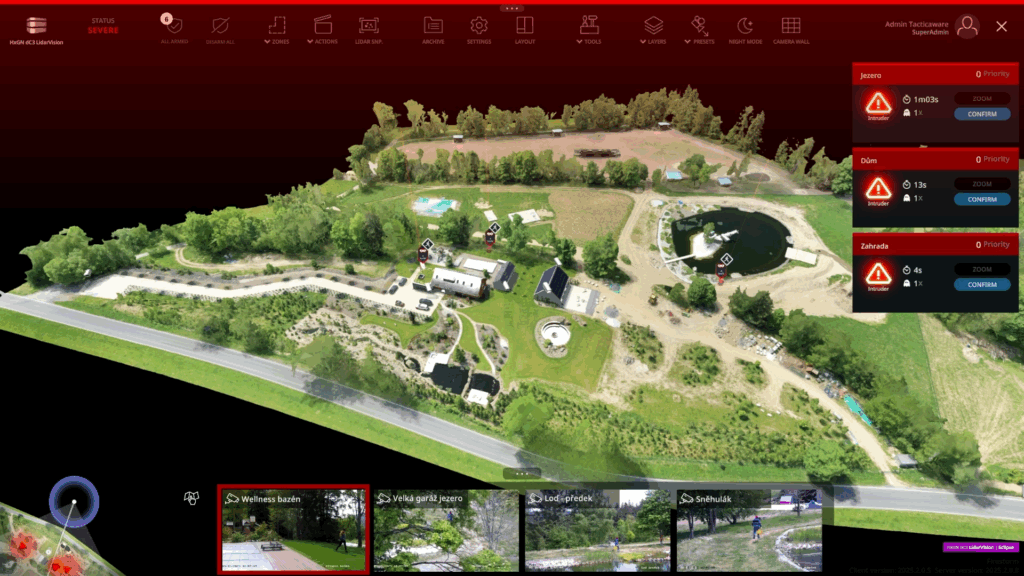
The center of our discussion was the HxGN dC3 LidarVision product line, previously known as AccurateVision. dC3 is the name for the overall ecosystem, an amalgam of “d” for detect and the military initialism “C3” for “command, control, collaborate”. A 3D model makes all the difference, not only to customers’ visualization and understanding but also to the success and accuracy of detection. Decreasing the level of false alarms is crucial too and of course lidar detects moving objects that reflect the laser beam. “That was the reason for my logical shift from building technologies, and special security like explosives, back to lidar detection and perimeter protection.”
I spoke a little about my contact with lidar suppliers in Silicon Valley, whose big market is automotive but who view security as an important vertical. Radek acknowledged that Ouster sensors are often used in the Hexagon systems, which work with a great many sensors from multiple suppliers.
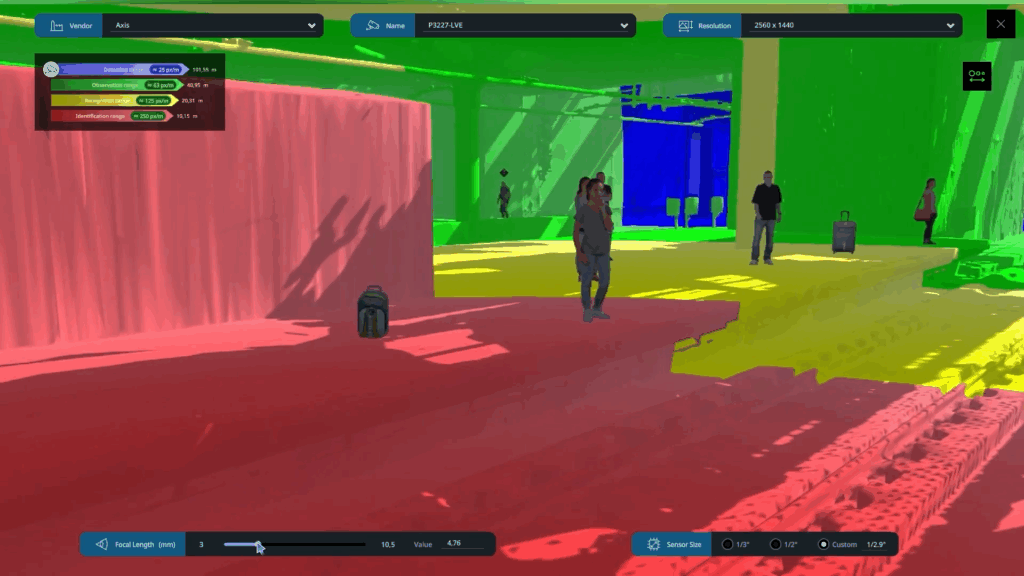
Zachoval described the portfolio in more detail. Within the dC3 ecosystem, there are various products: video management system; analytics; the solution for tracking goods in retail situations, which uses video footage perspective; PSI solution (PlantState Integrity), which collects information from the security feeds, like the access control system; video management intrusion detection system; and lidar detection, i.e. LidarVision. These powerful tools do the physical detection of intruders. Designer, however, facilitates the planning of the digital project before deployment of the physical sensors.
For this design phase, the customer needs to acquire a 3D model of the area. The software enables the user to choose appropriate lidar sensors from a library. This gives the beam distribution, the maximum range and so on. Then place the sensors anywhere in the model, and the software shows the beam projection, shadow points and blind spots, because it depicts the distribution of the beams in all the directions in which the sensors can point. The software must cope with the different ways that the various sensors transmit raw data – at present there is no standard for this.
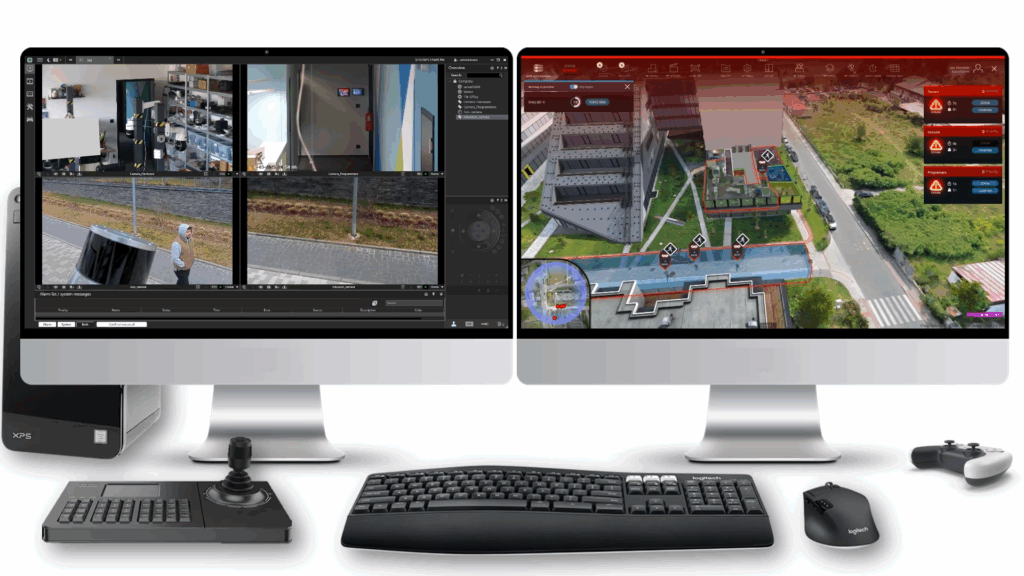
I asked Zachoval about the trends and customer requests that were influencing product development. He felt that there were several: higher accuracy; decreased false positives; precision of detection; and the volume covered by the system, i.e. customers want more than just the perimeter. Very importantly, lidar can be used to guide CCTV cameras, i.e. it is no longer necessary for a human operator with a joystick to pore over multiple image feeds to figure out what’s going on. Indeed, the operator is then free to make decisions, call law enforcement, etc.
How many lidars are hooked up to a typical system? Zachoval said three to six is the most common, but he had one installation with 60. He mentioned power plants with 50 and one affluent residential customer with 27.
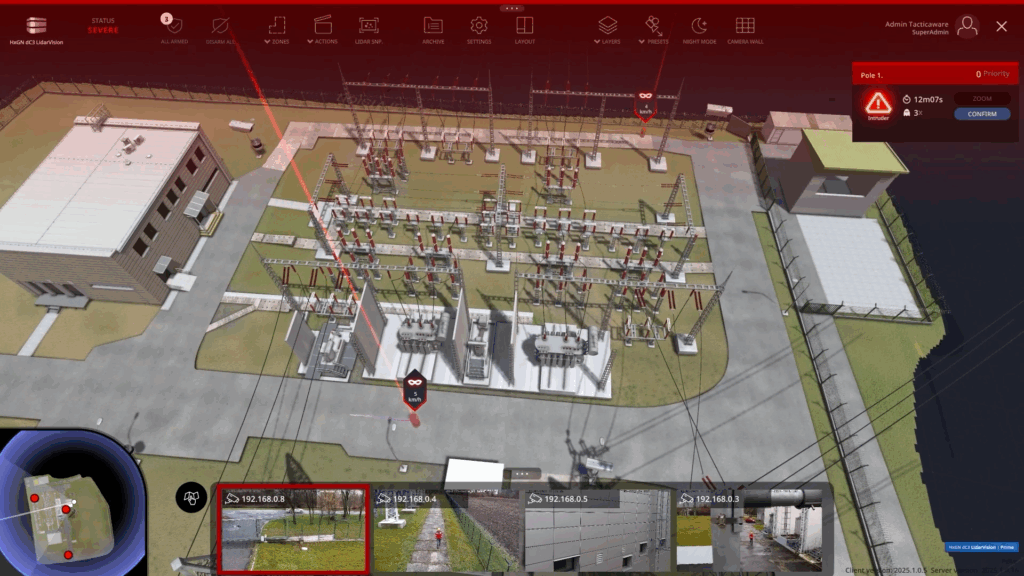
I asked whether his sales are affected by global economic instability, but Zachoval felt that the worldwide security situation was the big factor. Whereas, in the early days, lidar was very expensive compared to CCTV, now the cost of lidar sensors, partly as a result of technology and partly caused by competition between sensor suppliers, is much lower, so dC3 systems are increasingly attractive. Moreover, security forces are increasingly aware of the capabilities of systems such as dC3, so adoption is rising. The market is being educated, the product is being demystified, defense expenditure is on the increase – all these factors are positive.
We are working with Zachoval and his marketing team to obtain a use-case article. This is all the more important because they will be part of the new Octave organization and we must resist at all costs any temptation to lose touch with through too much concentration on the Hexagon alone. Lidar contribution to security is a growing, fascinating business.