The first user group meeting I organized was for Kern DSR users in the UK, held in York, England in 1987 (DSRs were analytical stereoplotters). 13 customers attended. Times have changed. Thanks to the generosity and hospitality of Hexagon and its marketing agent in London, WeAreTFD, I was able to attend the 13th Hexagon LIVE Global in Las Vegas. The first took place in Orlando in 2011 and all have been held in the US except the 2015 event in Hong Kong. The 2025 instantiation took place in the sparkling new Fontainebleau Hotel towards the north end of The Strip, where Hexagon hosted over 3000 customers, partners, influencers, and employees, representing 59 countries.
At the opening reception on Monday evening, I had a charming conversation with Lukas Koller, CFO/EVP of Hexagon Geosystems. Lukas was frank and friendly. Sometimes talking to a beancounter is more informative with respect to the business environment than technical discussions with experts!
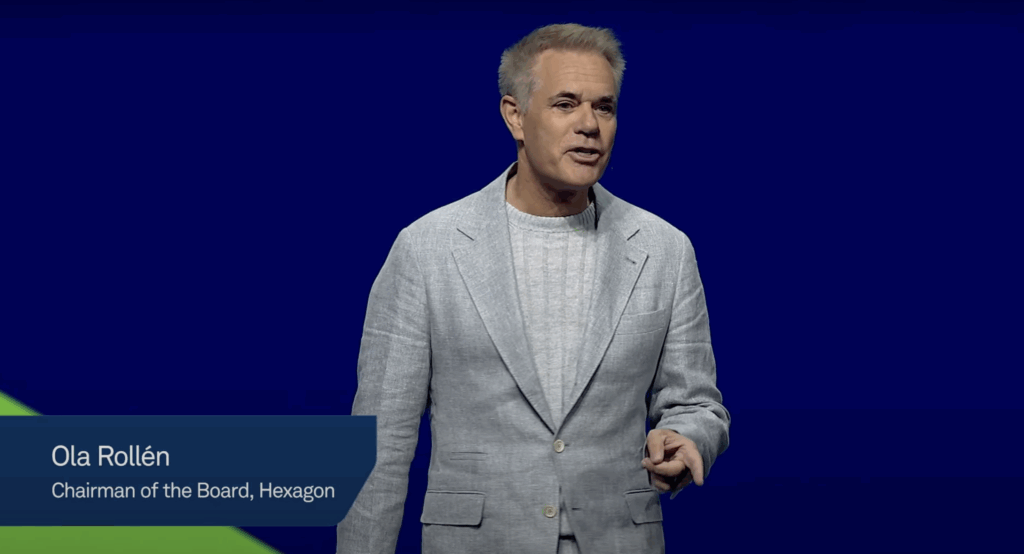
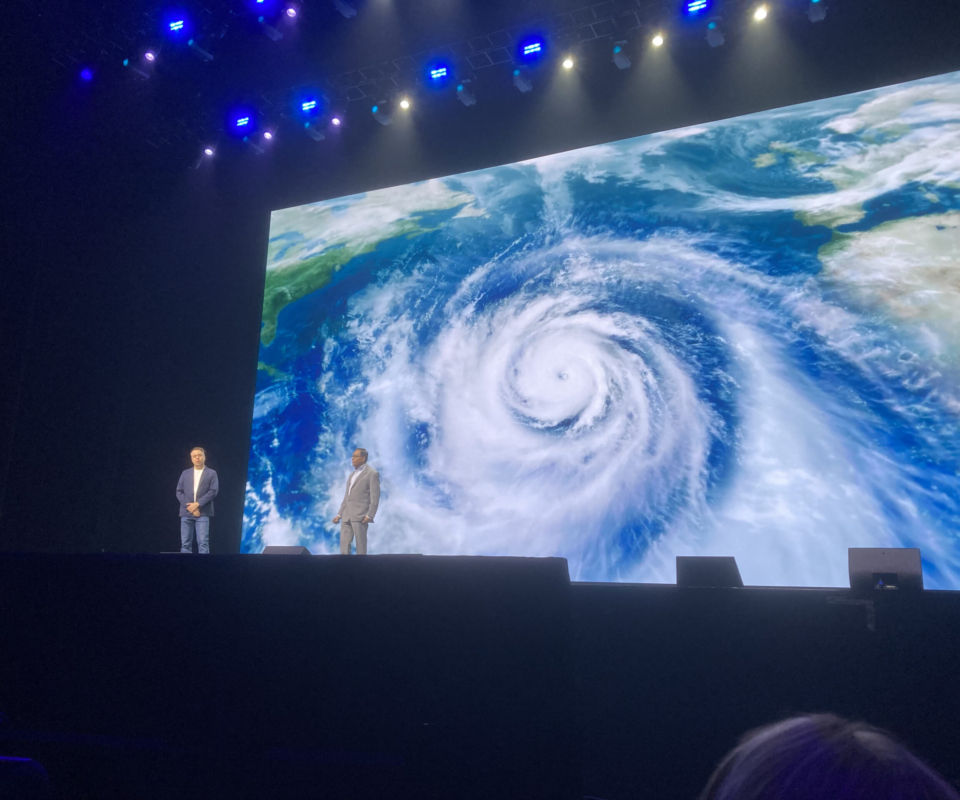
Ola Rollén, chairman of the board of Hexagon AB, gave the opening keynote, a typically well prepared, occasionally witty, wide-ranging presentation, on the theme of measurement. He reminded us that 25 years had passed since Hexagon acquired Brown & Sharpe Manufacturing Company, the first step to becoming the world leader in measurement. He attributed the phrase “to measure is to know” to Lord Kelvin – what better source could there be than professor of physics at the University of Glasgow? He summarized Hexagon’s progress, mentioning some of the acquisitions, then smoothly revealed the name Octave for the spin-off of its Asset Lifecyle Intelligence and Safety, Infrastructure & Geospatial divisions, and related businesses.
Mattias Stenberg, current president of Hexagon’s Asset Lifecycle Intelligence and Safety, Infrastructure & Geospatial divisions and incoming Octave CEO, took the stage. He explained that Octave will combine four business units, giving greater strategic focus, accelerated growth, and would take the company up an octave. Octave will have 7500 employees, revenues of €1.5b, solid profitability, sustainability – a unicorn from day one, cool for a start-up! It will design, build, operate, and protect world’s most critical assets. “Born digital, software first, Octave will deliver intelligence at scale.”
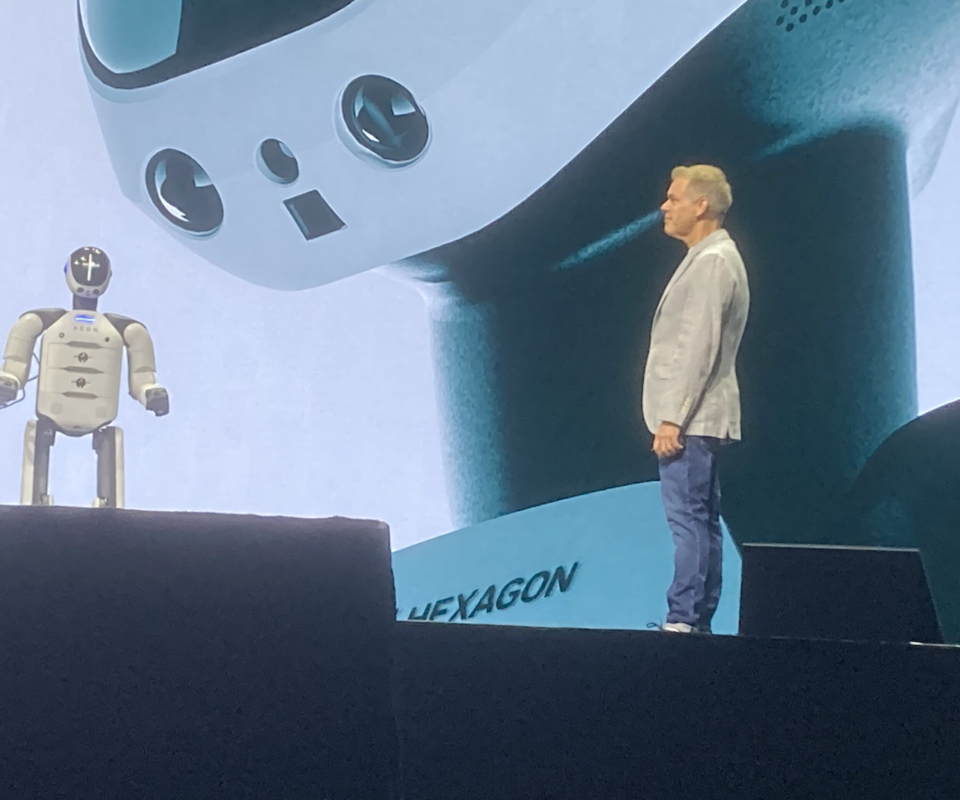
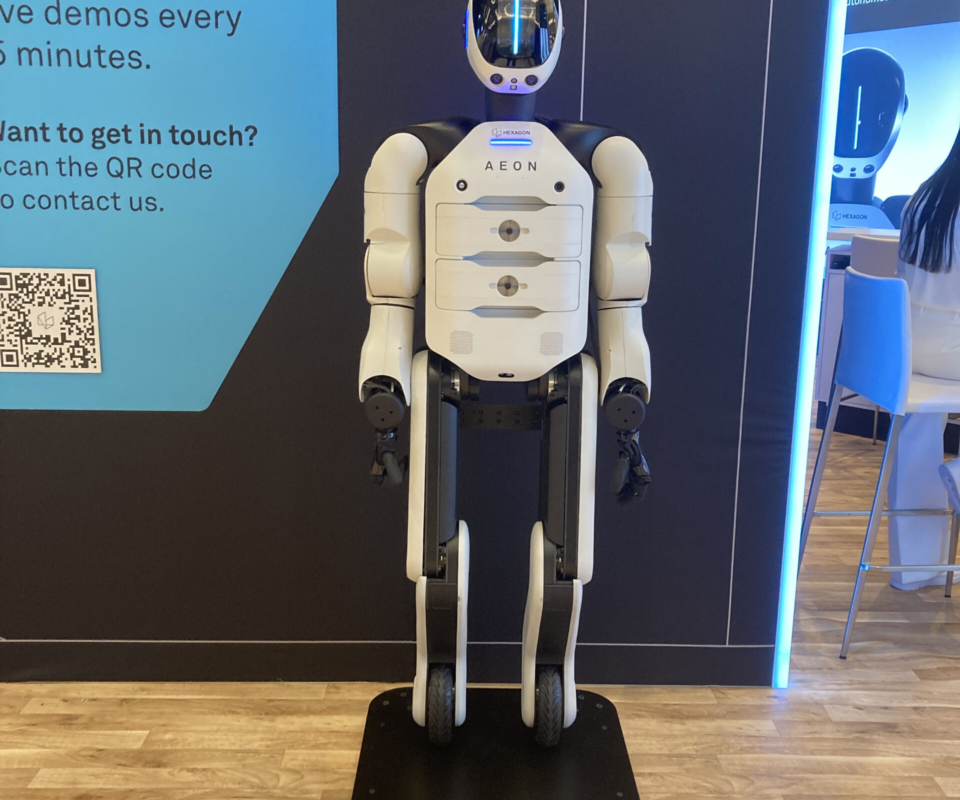
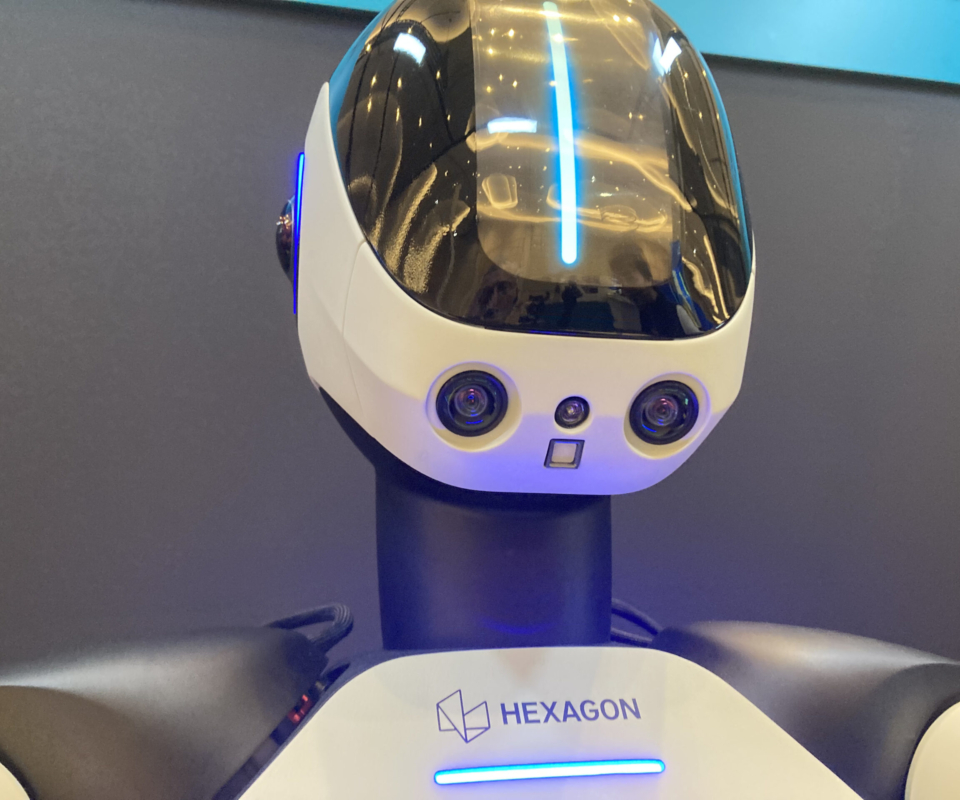
Rollén continued with a brief, powerful tour de force, describing measurement today with multiple real-world examples, then linked this to solutions for some of the world’s biggest problems. He ended by introducing Hexagon Robotics and its new android robot, AEON.
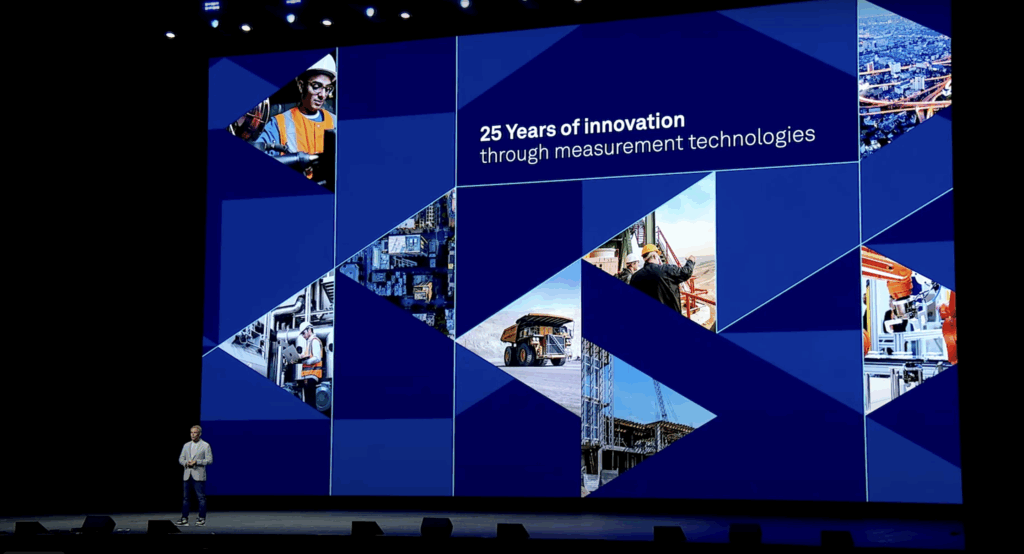
The stage was thus set for CTO Burkhard Böckem, who welcomed us to the age of intelligence with a reminder that everything starts from measurement. He started with some history of Hexagon’s innovations, which was engaging and complemented Rollén’s customer cameos – Hexagon really has made progress. He brought on Mladen Stojic and Vivek Mokashi for an Octave pitch. The use of lidar for security will be considerable – more on this in Part IV. Böckem continued with more pithy phrases to undergird the measurement theme, together with examples of the latest products – such ATS800, iCS50, MAESTRO, TRK300, CountryMapper – which all looked good, with lasers everywhere, but communications and software complete the solutions. And there’s something coming that fits on a helicopter. Hexagon have been working on AI for 13 years. Tempus fugit.
Böckem introduced a theme that would be emphasized on many occasions: Hexagon’s use of NVIDIA Omniverse with the HxDR software to expedite fabulous visualization, for example for digital twins. Rev Lebaredian, NVIDIA’s vice president of Omniverse and simulation technology, underlined the power of the partnership.
Böckem ended with AEON, the robot Hexagon have created after ten years’ innovation in autonomy – “Ola asked me to make it.”
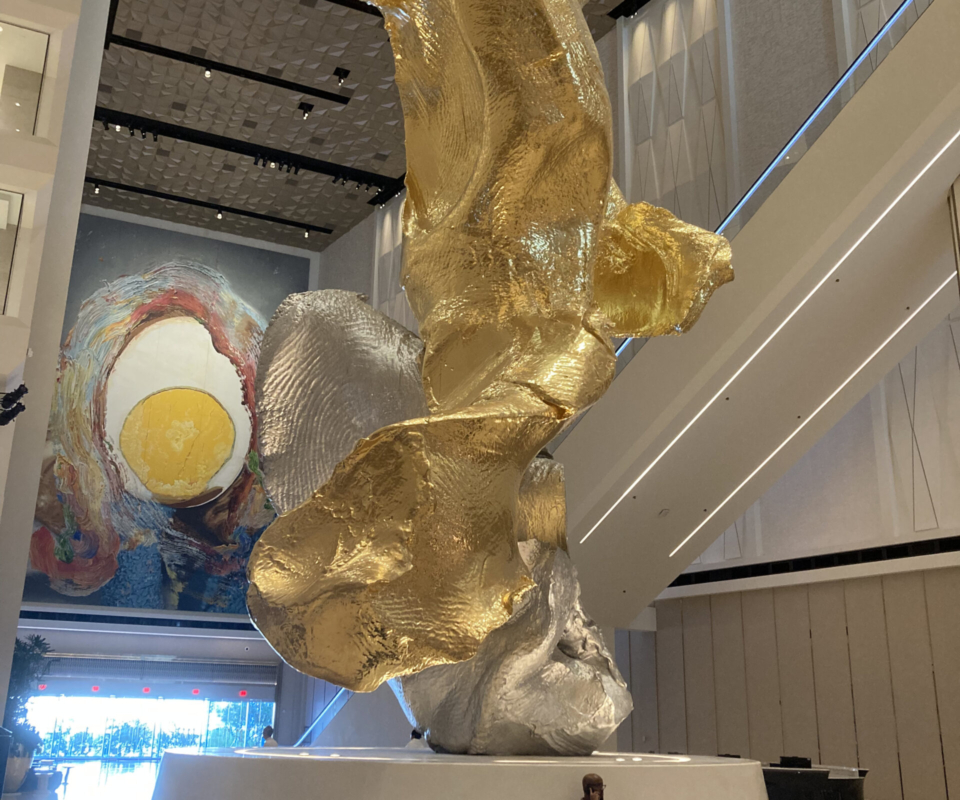
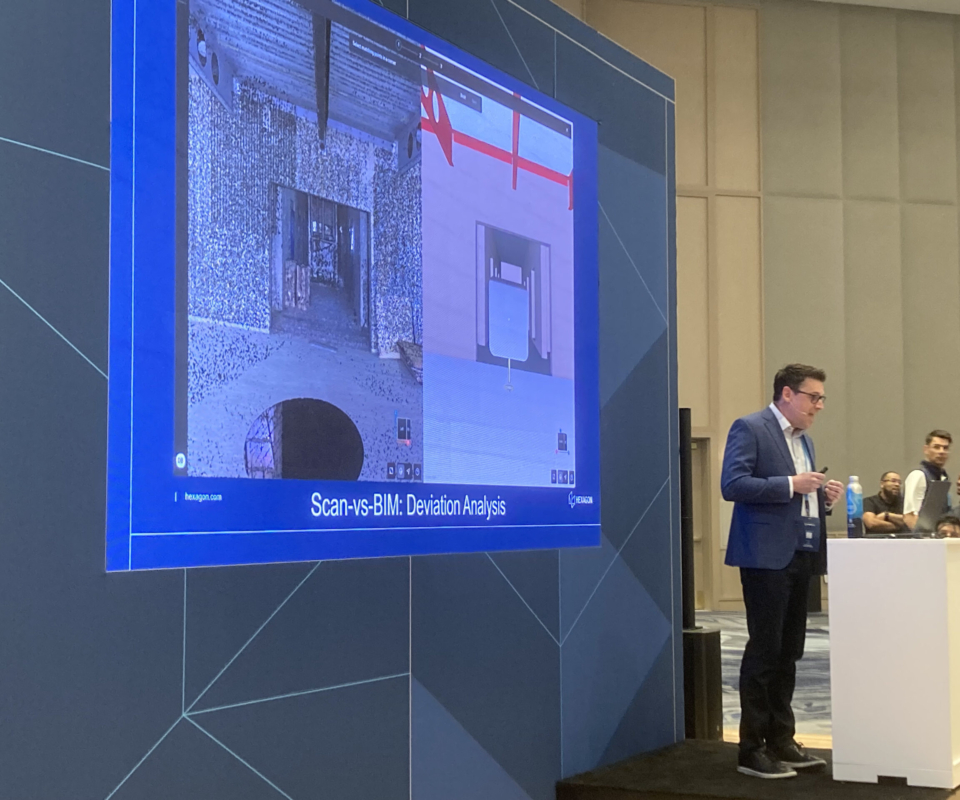


The challenge with meetings like these is the embarrassment of riches – picking sessions from a huge menu. There’s far too little space here for detail on the ones I attended. I chose, for example, “Enhancing the world’s infrastructure with terrestrial laser scanning” by Jesús Bonet, Director Sales & Business Development, Hexagon Geosystems. Again, the message was the incredible progress, from the early Cyrax systems to the compact, high-performance laser scanners of today, backed up by AI-enhanced software, Reality Cloud Studio powered by HxDR. The underlying technologies are TLS, MMS and SLAM, but the skill is choosing the optimum solution to a measurement problem. This was a well prepared presentation, covering considerable ground and illustrated by numerous customer stories.
Later in the day I took in “Maximise ROI with AI reality capture workflows in cloud and office”, by Eric McSherry, VP Platforms and Solutions. Several of the themes paralleled those in Bonet’s presentation and both speakers cited the NVIDIA Omiverse capability.
There were fine customer presentations too. I really enjoyed the one from the Ministry of Public Works, Indonesia, describing aspects of the development of the new capital, Nusantara. The goal is building smart, green and resilient infrastructures, and they’ve started appropriately, getting the geodesy right via 177 maintained control points.
Equally riveting, but very different, was Philippe Carrier of French company CARRIER Géomètres Experts, “Pushing mapping to the limit: Mont-Blanc tunnel – 3D case study,” a superb account of the practicalities of surveying a 12-km tunnel with a Leica TRK700, augmented by a specially designed lighting system from Meandre Technologie.
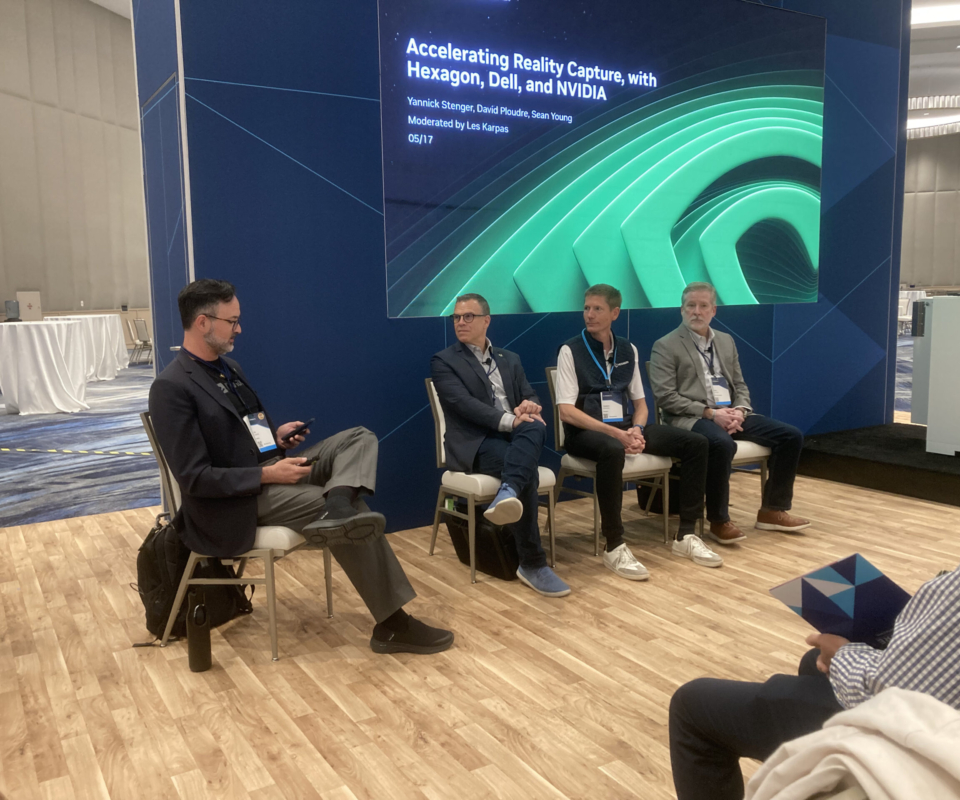
Some of these sessions were held in theaters within the Zone, the exhibition area. On several occasions it was standing room only, for example for “Accelerating reality capture with innovations in Compute,” a discussion with two panelists from NVIDIA, one, Dell and one, Hexagon Geosystems. This wasn’t too geeky and the questions from the audience suggested serious investment intentions.
Wednesday began with “Experience. The Difference,” by Henning Sandfort, president, Hexagon Geosystems. This must have been tough – Sandfort joined Hexagon from Siemens only four months previously. We know, however, from multiple, tightly orchestrated user meetings by many companies, that today’s executives are eloquent, polished, well dressed, multilingual and fastidiously rehearsed. Sandfort ticked all the boxes, but admitted at the beginning that he had just survived an “amazing, intense ramp-up.” He developed the measurement theme by emphasizing experience, applicable to “endless opportunities.” The presentation was well designed and wide-ranging. I appreciated how he approached the topic, “Time margins shorter, projects bigger, high material waste, decisions taken on 5% of available data. Construction leads all industries in workplace injuries and deaths.” Like other speakers, he showcased some products and gave wonderful use cases. These are too numerous to list, but I admit that I gasped when he showed views of the Hinkley Point C power station in UK – the site is vast, the measurement challenges unimaginable. The presentation took an unexpected turn, with an on-stage interview, in which Henning posed questions to Emanuela Chimiuc, engineering survey manager on 10 km of the controversial HS2 rail project in England. She talked eloquently about the challenges of both surveying and monitoring, and some of the Hexagon kit used to ease the task. The whole audience, captivated by her elegance, poise and exuberance, was disappointed when this came to an end and Henning returned to his angles on the conference themes, such as, “Every construction worker deserves to go home safe.”
The gentlepersons of the press were invited to a round-table with Sandfort. He started off by organizing coffee for us all – I loved that! He graduated from Karlsruhe Institute of Technology, a school renowned in the worlds of photogrammetry, lidar and computer vision. He talked about his years with Siemens and now has the privilege of living and working in the gorgeous town of Zug. We began with a discussion of the conundrum that surveyors fear automation may replace them, yet it’s essential to get the job done! Will it make surveyors more efficient rather than replace them? Automation, argued Sandfort, will lead to acceleration and, indeed, more jobs. Humans deliver insights, they don’t just capture data. It’s not surprising that people are anxious about automation, but there’s so much to do. Similarly, using the cloud to optimize data sharing will smooth the part forward. Next we considered how to interest young people in the technology. It’s dazzling to be sure, but jobs in big tech beckon. Sandfort had faced this issue in Siemens too. Perhaps young people don’t understand the level of technology in the construction industry – it’s not sledgehammers and survey rods anymore! Previous leaders in Hexagon had come from surveying backgrounds, but now perhaps industrial engineering backgrounds are more appropriate. Someone suggested Sandfort should be out in the mud for customers to see!
Back on track, he warned that there’s a lot to be done before the full benefits of the cloud will accrue. Maybe only older people worry about the longer-term future – kids don’t! We can easily acquire gigantic volumes of data – scan everything! – but we can’t process the data and extract value fast enough. Sandfort acknowledged that fast feature extraction is key. We have mastered the hardware and physics, but the big developments will come from extracting value better and quicker from all that data. NVIDIA Omniverse would help on the visualization side. The audience was clearly interested in the future direction of the HxDR software. Sandfort made the excellent point that Hexagon needs to understand better what customers use it for. We’re in a good place to have conversations about their needs. What drives customers’ business outcomes? The pricing model is more volume- than feature-based, which matters to smaller customers. Hexagon has a multiplicity of use case, all very different, but the architecture can handle this.
The discussion moved on to Octave. Design, build, operate, protect. How will the companies divide this up? Would Hexagon and Octave compete? Sandfort thought not, since the latter’s focus is asset management, a gigantic market, but of course each may use the other’s products when necessary. It’s unlikely that Octave will build products like Reality Cloud Studio, or other parts of HxDR, to be better than Hexagon’s. It will be a US company in Huntsville. Customers are worried about the split causing their software to be disconnected.
There was a short discussion of quantum sensors, e.g. quantum radar. Sandfort said it starts with what we want to do, many of the technologies we now use are 15 years old. But more technology will help us do more, much faster. We talk about new build, but really we’re in the brownfield space, even in China.
It seemed almost bizarre to jump from this practical business issue to robotics, but the journalists in the room were clearly captivated by AEON. This is not like a concept car at an auto show – it’s real and it will be used. I wondered whether AEON would have Spot the dog as a co-worker, but kept my mouth shut rather than mention trivial anthropomorphism! But AEON is not just a fun project – it really is a serious addition to today’s data capture technologies. We moved into general discussion about AI: we may not shape it, but we will need to bring it into our industry.
Everyone was reluctant to end this session, but we all had places to go. At the very end, there was more discussion of more frequent scans of construction sites and buildings – this topic had come up several times. But people need to be realistic about how often they scan. We have to do better in terms of making sense of all the data! I think attendees were impressed at how much he had picked up in so short a time. Someone asked what he had found surprising or unexpected. He hesitated, but felt there were commonalities with what he had experienced at Siemens. We must find ways to bring technologies into processes. It’s about the people, driving change, outcome-based discussions. There are so many stakeholders, not all of them easy to involve. There are workers on site, but also in the office. He’d learned a lot about the specifics of surveying and capture, the amazing abilities of hardware, but the challenges are not unique. Surveying as an expertise is European-centric in many ways, but it’s different in different countries. The major themes, though, are common.
On Wednesday evening, at an elegant dinner for us media folk, I met a remarkable member of Hexagon leadership, Alex Brihac, vice president strategy and M&A, Hexagon Geosystems. Alex is top drawer: with engineering degrees from Lehigh and Cambridge, he rose to associate partner at McKinsey before joining Hexagon. I’ve always been fascinated by M&A, readers are aware of the numerous acquisitions that have shaped the Hexagon of today (and one could say the same about Trimble), so I undertake to pursue an article or podcast about Alex.
A session on Thursday at lunch-time stuck in my memory: “Accelerating mobile lidar surveying workflows with AI feature extraction,” by Russ Hall, mobile mapping & extraction manager, Langan, and Alexander Baikovitz, CEO & co-founder, Mach 9, a San Francisco start-up. Hall is a land surveyor and Baikovitz an IT guy from Carnegie Mellon with some NASA history. They described workflows that take data from TRK700 through the Pegasus software, then Mach 9 software, with output to Autodesk or Bentley. The Mach 9 Digital Surveyor software platform performs feature extraction very fast and appears to be reliable. Hall confirmed Langan’s satisfaction with the product. Could Mach 9 be a future Hexagon acquisition?
Driving home, accustomed now to the 45ºC/113ºF refueling stop, I reflected on what I had experienced at Hexagon LIVE Global 2025. Sure, there was the luxurious Fontainebleau venue. Sure, Hexagon ran a fine event and their presenters were well prepared, prompt and cohesive. Big changes of interest to LIDAR Magazine readers, other than incremental product developments, include the spin-off into Octave, which will include the lidar-based security system; the arrival of Henning Sandfort to lead Hexagon Geosystems, while his predecessor, Thomas Harring, moves to EVP in the Hexagon C-suite. AEON leads the drive to autonomy; AI is everywhere; the hardware products look super. But I felt a subtle difference from earlier years: there seemed to be a little less razzamatazz, a tad more gravitas, as speakers, including not just Hexagon leadership but also customers, strove to get the message across. For lidar enthusiasts, it’s gratifying to be told that measurement is at the center of everything and that the surveyor is important. With all this amazing technology to enjoy, why are professional surveyors not more prolific? Be prepared to read a lot more Hexagon news in the months to come.
Back home, I used the water bottle that Hexagon had given me. The instructions bade me scan the QR code after using it. I was informed that Hexagon would make a $2 donation to restoring forests and water in the Andes. Well done, Hexagon!